

Delft Blue: History of the Famous Dutch Pottery
Delft Blue: History of the Famous Dutch Pottery
How did Delft blue begin? Read the history of the famous blue and white pottery and shop Delft blue gifts from the Netherlands.
Blue on white, with windmills, flowers and landscapes: Delft blue is one of the most recognisable Dutch symbols. But where does it come from, and why is it still so popular?
A cheaper alternative to Chinese porcelain
Delftware began in the sixteenth century and flourished in the seventeenth. Ships of the Dutch East India Company brought expensive Chinese porcelain to Europe. It cost so much that only wealthy families could afford it. Potters in Delft looked for an affordable alternative and found it in earthenware with a white tin glaze, painted in cobalt blue.
Why Delft?
In the seventeenth century the city of Delft had many pottery workshops, often set up in former breweries. That is how the city's name became attached to the product. One well-known maker from that period is Royal Delft (De Koninklijke Porceleyne Fles), which dates from 1653 and still produces Delft blue today.
What do you see on Delft blue?
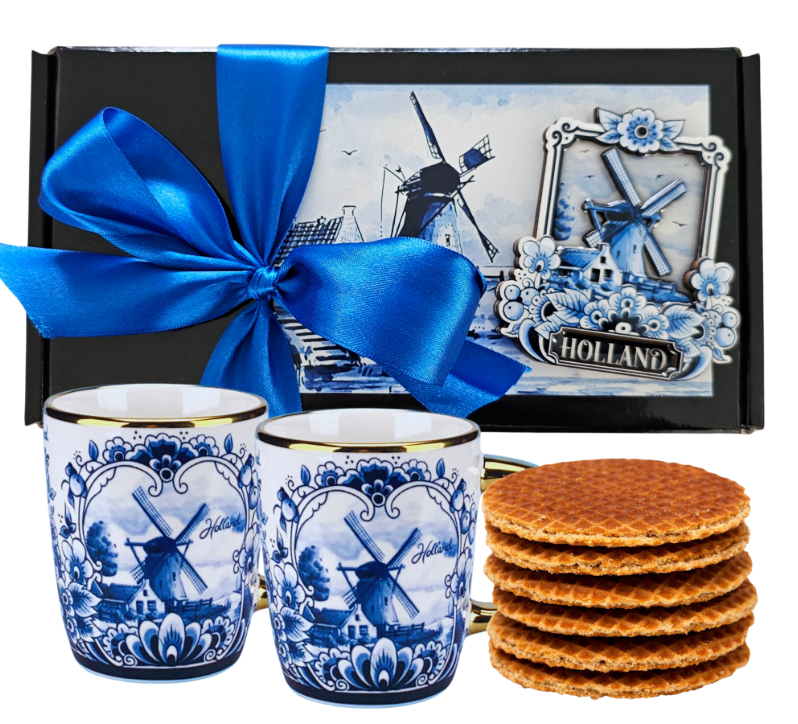
The classic scenes come from daily life in the Netherlands: windmills, canal houses, flowers, birds, ships and polder landscapes. Famous paintings were also copied in blue and white.
Delft blue today
Today Delft blue appears on much more than plates and tiles. In our Dutch Delft blue category you will find tins, mugs, socks, cheese boards and small souvenirs. At Christmas it turns up as decoration too, for example on baubles in our Christmas collection.
Looking for a gift for someone abroad? Combine Delft blue with something tasty in a gift set. That way you give a piece of Dutch history and something to enjoy.