

Dutch Clogs: History of the Wooden Shoe and Souvenirs
Dutch Clogs: History of the Wooden Shoe and Souvenirs
When visitors think of the Netherlands, they think of clogs. Along with windmills and tulips. But the clog is more than a souvenir: for centuries it was practical footwear for people who worked in a wet country.
Why did the Dutch wear clogs?
Much of the Netherlands is low-lying, wet and muddy. Leather shoes soaked through quickly and were expensive. A clog is made of wood, keeps feet dry and warm, and protects against sharp tools and heavy animals. The oldest clogs found date from the thirteenth century.
How is a clog made?
Clogs are traditionally made from soft, light wood such as poplar or willow. The clog maker drills and carves the shape from a single block, lets it dry, and sands it smooth. A well-made clog is cut from one piece, without seams.
Are clogs still worn?
Yes, although less than before. Farmers, gardeners and nature conservation workers still wear them, and safety clogs exist for work. Folk dance groups also wear them at performances.
Clogs as a gift or souvenir
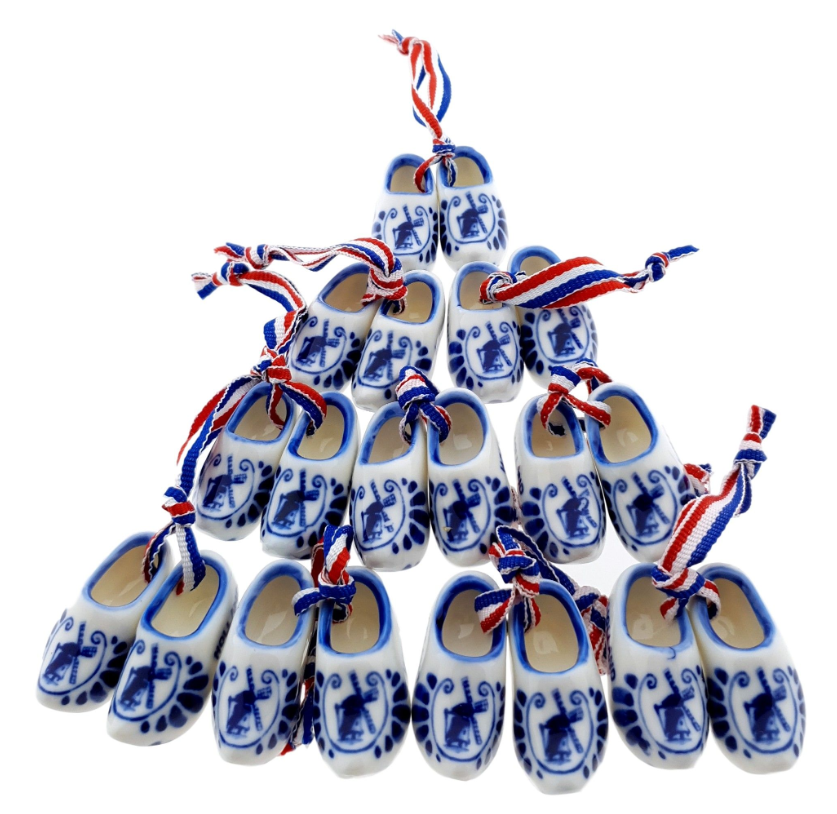
A pair of real wooden clogs is large and heavy to carry home. That is why many people choose a smaller souvenir: a porcelain clog in Delft blue, a clog keychain or clog-shaped slippers. In our clogs gifts category you will find these Dutch classics.
Want more ideas? Browse our souvenirs and the Delft blue products: many clogs are painted in that famous blue and white.